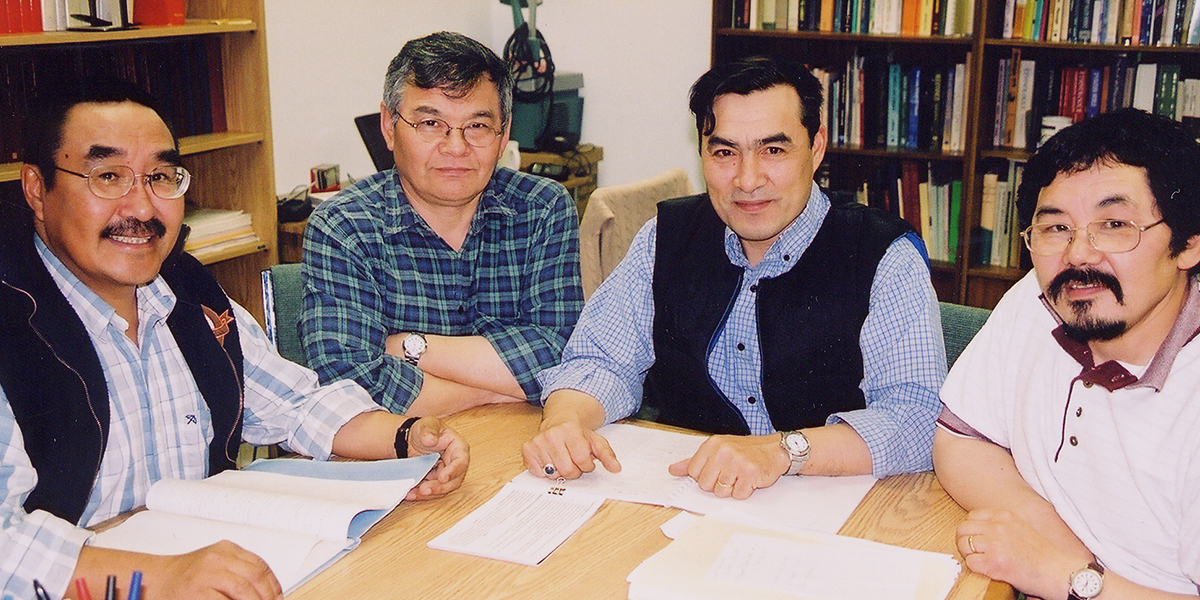
Description: Jonas Allooloo (left) seen working with other members of the Inuktitut Bible Translation Team: Benjamin Arreak, Andrew Atagotaaluk, and Joshua Arreak at the Canadian Bible Society’s translation office in Kitchener, Ontario, in 2001.
By Sue Careless
The Inuktitut Bible marked the first time in Canada that a translation was done by first-language speakers of Inuktitut rather than by missionaries. It took 34 long years.
The response from the Inuit was tremendous. “Many people have personally thanked me for it," Allooloo said. “I have even had people come up to me amazed, saying, ‘Now God speaks my language!’”
The 2021 Canadian census reports that 70,545 individuals identify themselves as Inuit, of whom 37,570 self-reported Inuktitut as their mother tongue.
Allooloo died on February 24 in Ottawa, where he had been receiving medical treatment.
Ordained in the mid-1970s, Allooloo served faithfully in parish ministry and was dean of St. Jude’s Cathedral in Iqaluit, Nunavut, from 2012 until his retirement in 2018.
Two years later, he found himself homeless in the very community he had long served. Although the situation was eventually rectified, the incident caused a huge embarrassment for the Anglican Church of Canada.
In December 2020, the Anglican Journal, published an article, “No room in the inn,” which detailed how the North’s housing crisis of low vacancies and some of Canada’s highest rents left Allooloo and his wife, Meena, unable to find affordable housing. To cope, the couple moved in with their daughter, a cook who lived in staff housing.
Salaries for clergy in the North are substantially lower than in the rest of Canada while living expenses are high. Most live in church-owned rectories while leading parishes, but have difficulty finding accommodation after they retire.
“The homes that are allotted [in Iqaluit] are for people who are coming in from the South,” Allooloo told the Anglican Journal in January 2021. “We, the Inuit, are set aside as second-class citizens.”
Anglicans across the country were shocked to learn of the couple’s plight, and donations enabled them to find a one-bedroom apartment. However, they had to keep most of their possessions in storage.
Realizing that Allooloo’s situation was not unique, the Anglican Church Women established the “ACW Council of the North Retired Clergy Fund” with the Anglican Foundation on November 15, 2022. It provides financial support for housing and living expenses to retired non-stipendiary clergy in the Council of the North’s nine dioceses.
Jonas Allooloo was born on Oct. 25, 1946 near Igloolik, an Inuit hamlet in Foxe Basin, Nunavut. His childhood was spent in a camp near Mittimatalik (Pond Inlet) on the top of Baffin Island. There his father, a Christian lay leader, led Sunday services out on the land.
Jonas attended a residential high school in Churchill, Manitoba, and later studied at the University of Manitoba in Winnipeg. He had Christian friends in the city and they enjoyed attending church together.
But in Winnipeg he also experienced racism. “Once I got kicked out of the Hudson’s Bay store for being an ‘Indian,’” Allooloo said in an interview with The Living Church in 2016. “Another time I was coming home from school with my book bag and I stopped at a store. The owner accused me of stealing and searched my bag. I often felt like white people were looking down on me and belittling me. That hurt. But during this time I sensed God was calling me to go back to the north and to minister to my own people.”
From 1972 to 1975 he studied theology and trained for the ministry at the Arthur Turner Training School, the Diocese of the Arctic’s theological college, which was then in Pangnirtung. It was there that his interest in Bible translation emerged.
Like most Indigenous languages in the Americas, Inuktitut did not have a writing system before contact with Europeans.
In Nunavik and most of Nunavut, Inuktitut is typically written in syllabics – a writing system originally created for the Cree in 1840s by James Evans, a missionary in Manitoba. This system was later adapted to Inuktitut and spread by missionaries and Inuit themselves in what is now Nunavut and Nunavik. (Inuktitut also has an orthography based on the Roman alphabet.)
The college was using a very old Inuktitut version of the scriptures. The translation was also challenging because it combined Northern Quebec and Eastern Arctic dialects. Whenever he and his fellow Inuk classmate Andrew Atagotaaluk read that old translation in class or during Morning Prayer, they would correct the typos and change some of the words.
“That old translation … wasn’t perfect, but God still used it to bring people into his church,” Allooloo said. “But how much more impact would a modern translation have if the Inuit could better understand what they read?”
There are distinct dialects in the Western Arctic, the Kivalliq region, South Baffin, North Baffin, and Nunavik (Northern Quebec), while the Inuit in Greenland speak a different dialect entirely.
Allooloo told this story to illustrate the differences in regional dialects:
“When the Inukjuak people were being taken up to the High Arctic [in a forced relocation by the Canadian government during the 1950s], the ship stopped in Pond Inlet, where I was living. One of the elders went down to the ship to greet the Inuit who came from Quebec. When he came back he told everyone, ‘There’s Inuit on that boat, but when they speak, they sound like birds!’ They spoke a Northern Quebec dialect that he had trouble understanding.”
Work on a new translation formally began in 1978, when Bishop John Sperry invited all bilingual clergy in the Diocese of the Arctic to Pangnirtung for a workshop.
Sperry lived in the Western Arctic, and had been using a New Testament in the Copper dialect. It was a very old translation made by early missionaries to that region. Because of the lack of any modern translation in the North, Sperry felt that the time was ripe for a new translation.
Both Inuit and Qallunaat (white people) attended the workshop. There were 17 participants, including Allooloo and Atagotaaluk, who by this time had been parish priests for several years. The workshop was led by Dr. Eugene Nida, an Oklahoma linguist who was known as the father of modern Bible translation. Sperry had given Nida the job of selecting the team that would translate the Bible into Inuktitut.
“While we were there, we had to translate the Book of Ruth from English into Inuktitut,” Allooloo said. “We then had to show Dr. Nida our translations and explain the reasons we translated it as we did.”
“Nida believed that, if possible, translation should always be done by the people who own that language, because language is not only about words but also about a certain way of thinking,” Atagotaaluk said. “The missionaries did a good job translating into Inuktitut, but they could never think like Inuit.”
In an interview with the Washington Post, Allooloo recalled Nida’s message to non-Indigenous translators: “You may have learned the language well … but you’ll never learn to think the way these people do.”
Nida chose Allooloo and Atagotaaluk as well as the Rev. Benjamin Arreak, who was made project coordinator. His younger brother, the Rev. Joshua Arreak, joined the team a little later.
Since all four were busy parish priests, they didn’t have time to do the translation work while they were in their communities. Instead, they got together twice each year, for a six-week session. Each session would be held in a different community, so they could be sensitive to the different regional dialects as they translated.
There was something of a revival whenever the Bible translators arrived. “People in the communities were always excited to have us come,” Allooloo said. “The week before we arrived, they would announce on the radio that the Bible translators are coming. So when we got there we would preach and lead worship services.”
The team followed a procedure set out by the Canadian Bible Society (CBS). Each priest would translate one book of the Bible, and then the others would critique it. CBS consultants who knew Hebrew and Greek would then check their revised translations.
One huge challenge was how to describe biblical civilizations that existed in scorching deserts in a way that could be comprehended by those living in frozen terrain above the tree line. There are no words in Inuktitut for goat, sheep, or camel, so the team borrowed the English words and wrote them phonetically.
Certain biblical concepts, like grace, were difficult to translate. Eventually they used two Inuktitut words, which roughly translate as “God’s kindness that enables us.”
Thirteen years later, in 1991, the team had completed the New Testament.
Yet almost immediately people began asking them to translate the Old Testament too. Because their funding was limited, the team had only planned on translating portions of the Old Testament, but they quickly realized their people wanted the whole thing.
The team found the Old Testament easier to translate than the New because both Jewish and Indigenous traditions stress oral storytelling and history. And the Hebrews were a nomadic people living close to the land, as were the Inuit. “We often found that Hebrew thinking was very close to Inuit thinking,” Allooloo said.
The team met only three weeks at a time to translate the Old Testament, but they still met twice a year. In 2002 Atagotaaluk was elected Bishop of the Arctic and Benjamin Arreak a suffragan, but they continued with the translation work. When he retired in 2010, Bishop Arreak worked full time on the project.
After 21 years the team completed the Old Testament.
The enormous $1.7 million task was sponsored jointly by the Anglican Church of Canada and the Canadian Bible Society. “No book has contributed more to language maintenance and literacy than the Bible,” said Hart Wiens, the Society’s director of Scripture translations, who worked with the team since 1993.
The Inuktitut Bible was dedicated on June 3, 2012, the same day the new igloo-shaped St Jude’s Cathedral in Iqaluit, the capital of Nunavut, was consecrated. (The original cathedral built in 1970 had been destroyed by arson in 2005.) It was a day of double rejoicing.
Five thousand copies of the Inuktitut Bible were printed and circulated across the North. There have been several reprints of the New Testament. A year later, the entire Bible became available for free online.
Nor did the team members rest on their laurels. In 2016, they began revising their translation.
Allooloo also worked on a children’s Bible in Inuktitut featuring simplified versions of Bible stories.
Jonas Allooloo is survived by Meena, his wife of nearly 45 years; five of their six children; thirteen grandchildren and six great-grandchildren; his sister, Abigail Allooloo Idlout; and the three remaining members of the Inuit translation team. He was predeceased by one of his two sons. TAP
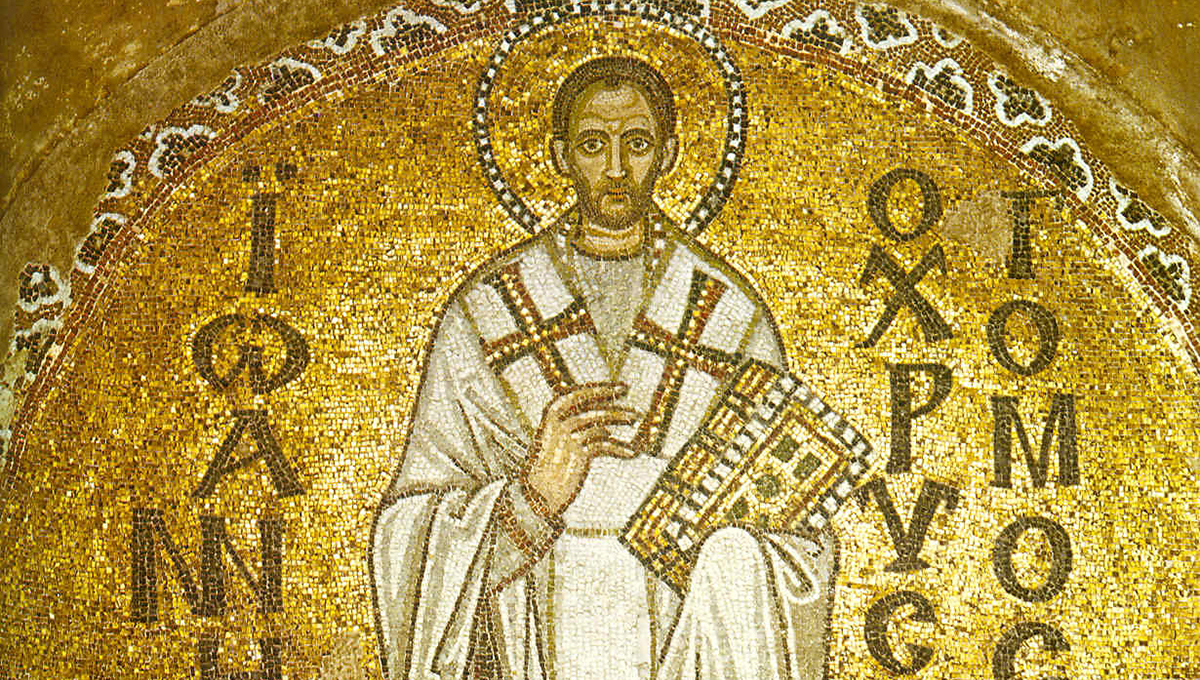
IN THE FOURTH century, in the region we now know as Turkey, there lived a pastor named John. Although his life was relatively short (he died at the age of 58) he has had an enormous impact on the Christian church. John was incredibly gifted, intense, and deeply serious about his faith. Not long after his conversion, he withdrew from society to live as a hermit for several years. He allegedly spent two full years doing nothing but memorizing the Bible while standing up. It was a rigorous discipline; he hardly slept, and his health was permanently damaged by the ordeal.
continue reading
ONCE when a friend and I were having coffee and chatting about hell, as friends do, and I grew increasingly squeamish at the topic, as one does, my friend surprised me by saying: “Why would someone bother sharing the gospel, if they weren’t thinking about saving someone from going to hell?”
continue reading
POOR Pierre Poilievre, leader of the Conservative Party of Canada. On the one hand, a part of his base thinks he is too mild. That he should be more outraged in response to a long list of grievances from the past years. On the other hand, media pundits (and, indeed, the polls) suggest he may be too pugnacious, too negative, to really appeal to the broader Canadian public. We’ll see if his new advisor, Steve Outhouse, can help him pivot to a new, more positive and visionary tone, to give him renewed hope of electoral success.
continue reading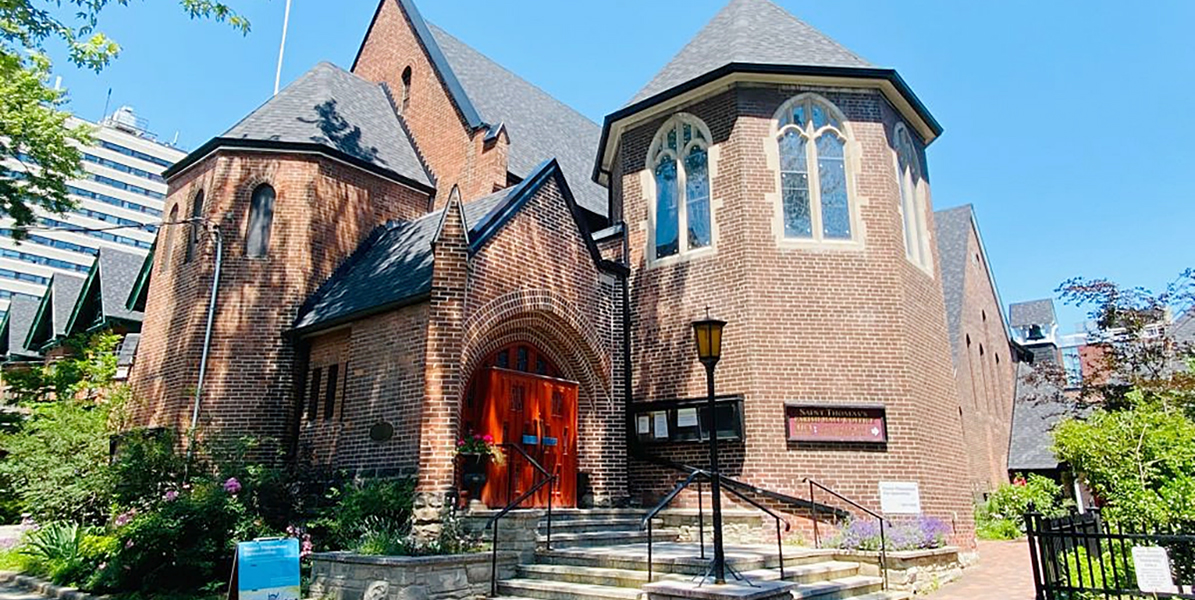
AN Easter homily series on the spiritual senses got off to a strong start on April 12 at St. Thomas’ Anglican Church in Toronto.
ONCE when a friend and I were having coffee and chatting about hell, as friends do, and I grew increasingly squeamish at the topic, as one does, my friend surprised me by saying: “Why would someone bother sharing the gospel, if they weren’t thinking about saving someone from going to hell?”
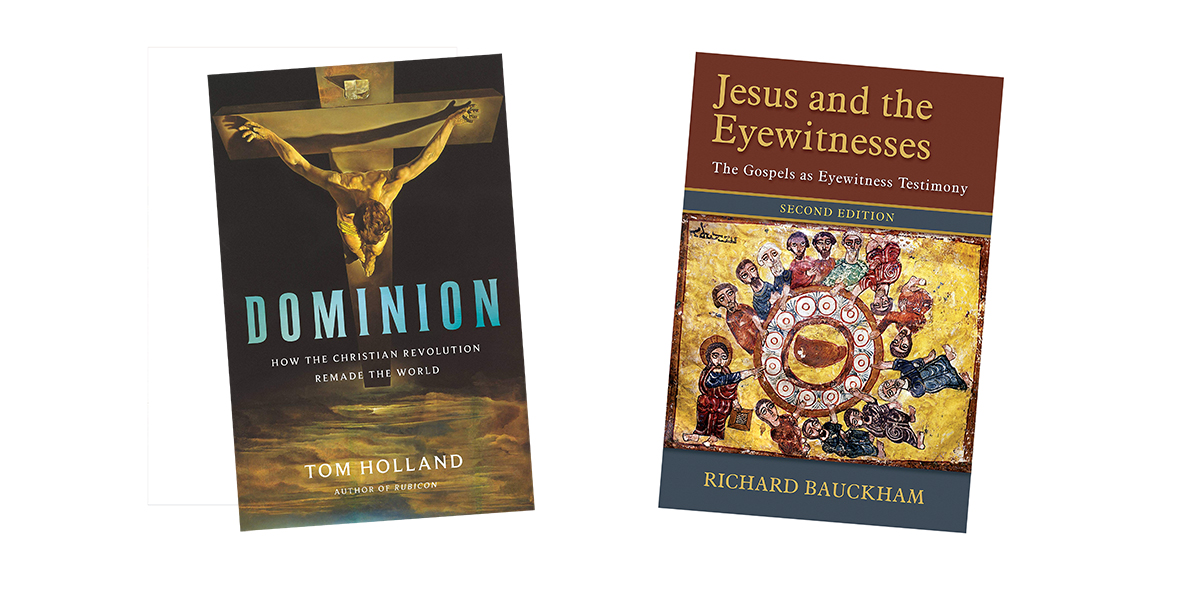
How the writings of Tom Holland and Richard Bauckham support a resurrection faith today
Copyright © 2026 The Anglican Planet. All rights reserved