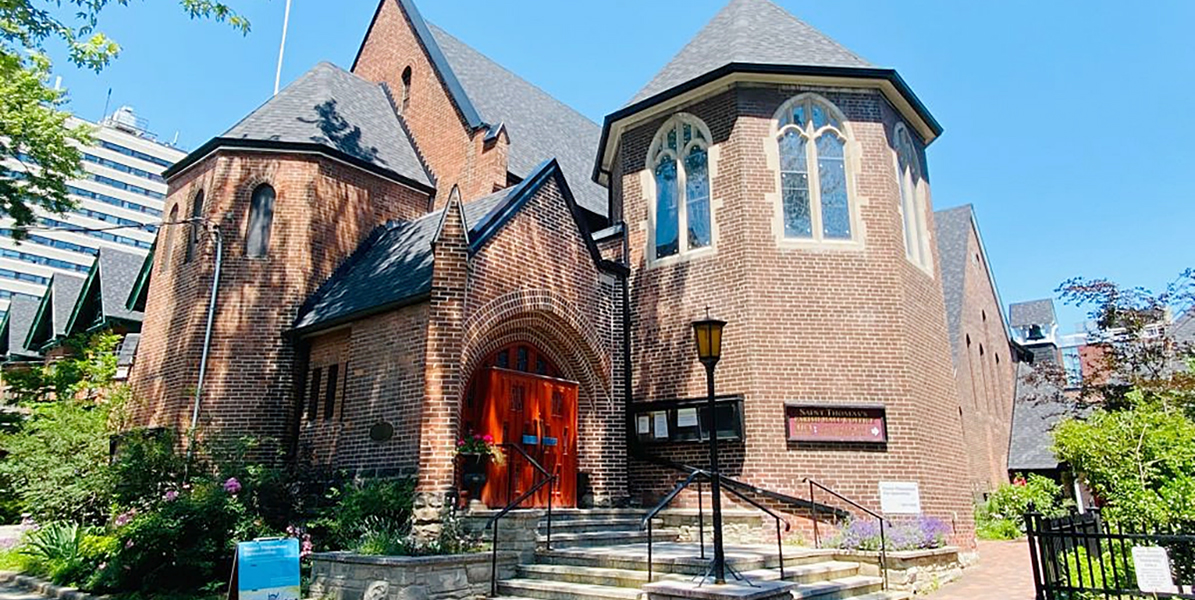
Description: This spring, St. Thomas’s Anglican Church held a series on the spiritual senses. ‘Open buildings are an invitation to enter Christ’s mystical body expressed architecturally.’
By Sue Careless
AN Easter homily series on the spiritual senses got off to a strong start on April 12 at St. Thomas’ Anglican Church in Toronto.
The first homilist, Dr. Matthew Milliner, addressed the sense of touch. The professor of Art History at Wheaton College in Illinois lamented how few downtown Toronto churches were open to the public in the daytime. “A locked church says God is not available—at least not now.” He clarified: “The Church of Christ exceeds our buildings but is still expressed by them.”
“Open buildings are an invitation to enter Christ’s mystical body expressed architecturally.” He quoted the twelfth-century French mystic, William of St Thierry, “Now do we not just place the finger of our hand into Christ’s side like Thomas did, we enter through the open gates all the way into the shrine of your soul where all the fullness of God dwells.”
The art historian said that in one of Catherine of Siena’s mystical visions, God the Father said, “Let your place of refuge be Christ crucified…. Dwell and hide yourselves in the cavern of his side.”
Milliner concluded that even if churches for legitimate reasons must stay locked, God stays permanently open. After all, Thomas’ encounter with the wounded but healed Christ happened “although the doors were shut.”
“We do well to keep our sacred spaces welcoming and open but even if a church cannot manage that, Christ still finds a way to encounter those for whom he died.”
On April 19, the Rev. Dr. Chris Brittain of Trinity College, University of Toronto, spoke on hearing, noting The Shema of Deuteronomy 6: “Hear, O Israel, the Lord our God is one Lord: And thou shalt love the Lord thy God with all thine heart, and with all thy soul, and with all thy might.”
Christ calls The Shema the greatest commandment.
Brittain quoted Rowan Willliams, the former Archbishop of Canterbury, as describing the Church as “the community that falls silent before something that comes from beyond itself.”
Moreover, faith comes from hearing the message and that message is the Word, the Christ.
The third-century theologian Origen spoke of Christ as the Word, the Logos, “a voice, a speech addressed to the soul. Once a soul’s spiritual ear has been opened it does not want to hear anything but the Word of Life that saves.”
Brittain noted that Psalm 23, which opens with “The Lord is my shepherd,” alludes to the importance of listening. After all sheep don’t so much watch their shepherd as listen for his voice. In the Gospel of John, Christ declares, “I am the good shepherd” and unlike the hireling, the sheep follow him for “they hear his voice” (John 10:3).
Brittain maintained that we need to practice “attentive listening,” that spiritual hearing demands “receptivity and the acceptance of being interrupted” by God. When Moses sees the burning bush that is not consumed, he doesn’t see God but he does hear his voice.
Moreover, God has already been listening to the Israelites and their agonies under their bondage to the Egyptians. “God listens to the afflicted before he commands them.”
Brittain then cited two twentieth-century Roman Catholic theologians. The German Karl Rahner argued that human beings were constructed to receive revelation through listening. “By our very essence we are listeners.”
In contrast, the Swiss Hans Urs von Balthasar argued that we need first to empty ourselves of our own internal noise if we are to imitate Mary at the Annunciation, that “faith is received passively.”
In the sixteenth century the Puritans rejected many of the ceremonies, rituals and sacraments of the Anglican tradition because, Brittain claimed, they understood Romans 10:17’s “Faith comes from hearing” to imply that listening to a sermon was the sole means of receiving God’s grace.
In response to the Puritans, Richard Hooker in the same century argued that Christ modelled the proper stance of human beings towards God which was “attentiveness and reception.” But limiting this to listening to the words of a human preacher, Hooker said, neglects the many ways God calls us out of our busyness and preoccupations. Brittain cited the beautiful choral music of Evensong and St Thomas’ church bells as sounds that draw us out of ourselves.
In this century, American theologian Mary Catherine Hilkert argues that “if God’s grace is truly universal and enfleshed, then the Word is already present in human experience before preaching.”
Brittain said feminist theologians would go beyond asking, “Where is God’s word best heard?” to “Which members of the community are being silenced and not listened to?”
Thus, for American theologian Delores S. Williams a theology of hearing should not be informed just by Mary’s receptiveness but also by Hagar’s in the wilderness—to whom only God is listening.
“Spiritual hearing occurs when perception and reflection are fused into an act of being attuned towards God,” said Brittain. “Such attention follows the resonance of God’s presence wherever that may lead.
“For us to be doers of the Word we must first be hearers of the Word,” Brittain concluded. “May we each be granted the grace to become holy listeners.”
The other homilists are all based in Toronto: The Rev. Canon Maggie Helwig of St.-Stephen-in-the-Fields (Sight, April 26); Dr. Joseph Mangina of Wycliffe College (Smell, May 3); The Rev. Dr. Jason Byassee of Timothy Eaton Memorial United Church (Taste, May 10); and Dr. Justin Stratis of Wycliffe College (Body and Spirit, May 17).
Each homily is being livestreamed during the 5pm choral Evensong at St Thomas’, located at 383 Huron Street in Toronto. TAP

STANLEY Hauerwas once said, “In a hundred years, if Christians are known as a strange group of people who don’t kill their children and don’t kill the elderly, we will have done a great thing… If we can just be a disciplined enough community, who through the worship of God has discovered that we are ready to be hospitable to new life and life that is suffering,…that is a political alternative that otherwise the world will not have.”
continue reading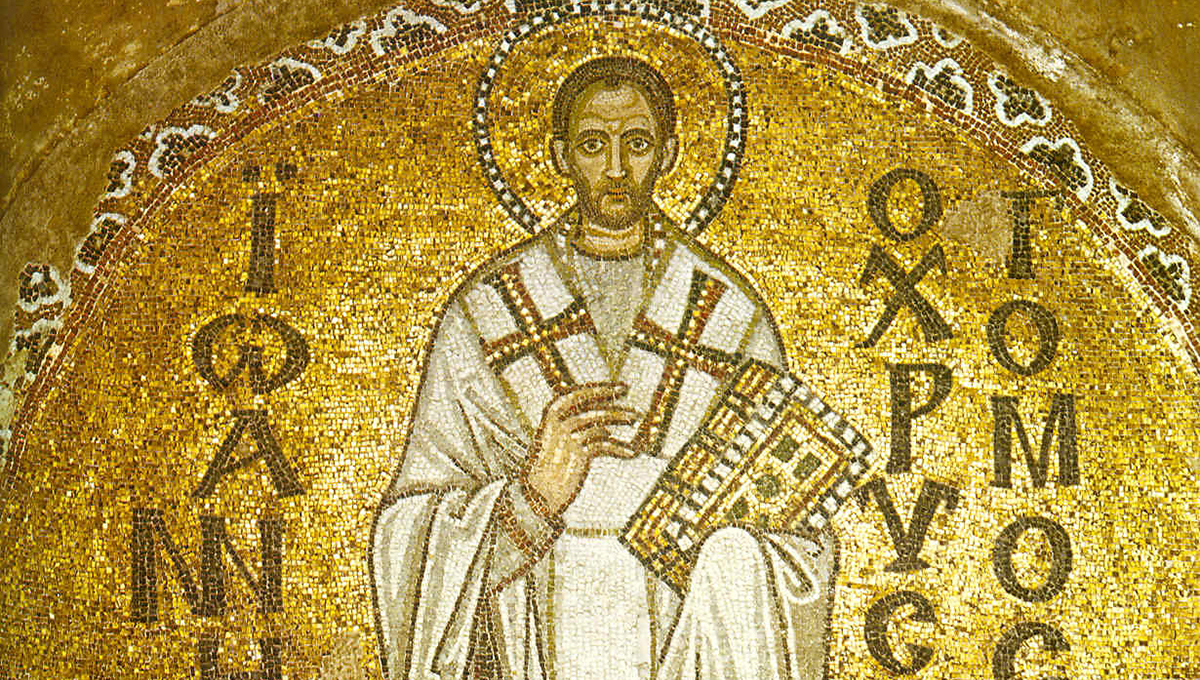
IN THE FOURTH century, in the region we now know as Turkey, there lived a pastor named John. Although his life was relatively short (he died at the age of 58) he has had an enormous impact on the Christian church. John was incredibly gifted, intense, and deeply serious about his faith. Not long after his conversion, he withdrew from society to live as a hermit for several years. He allegedly spent two full years doing nothing but memorizing the Bible while standing up. It was a rigorous discipline; he hardly slept, and his health was permanently damaged by the ordeal.
continue reading
ONCE when a friend and I were having coffee and chatting about hell, as friends do, and I grew increasingly squeamish at the topic, as one does, my friend surprised me by saying: “Why would someone bother sharing the gospel, if they weren’t thinking about saving someone from going to hell?”
continue reading
Judith Snowdon is an accomplished Canadian composer and arranger of choral, instrumental and worship music. For more than three decades she has received commissions from choirs as well as awards for her work. The Royal Conservatory of Music and the Canadian National Conservatory of Music have published many of her piano pieces for their students, while several of her hymns have appeared in denominational hymnals. Sue Careless asked the New Brunswick Anglican more about her musical journey.
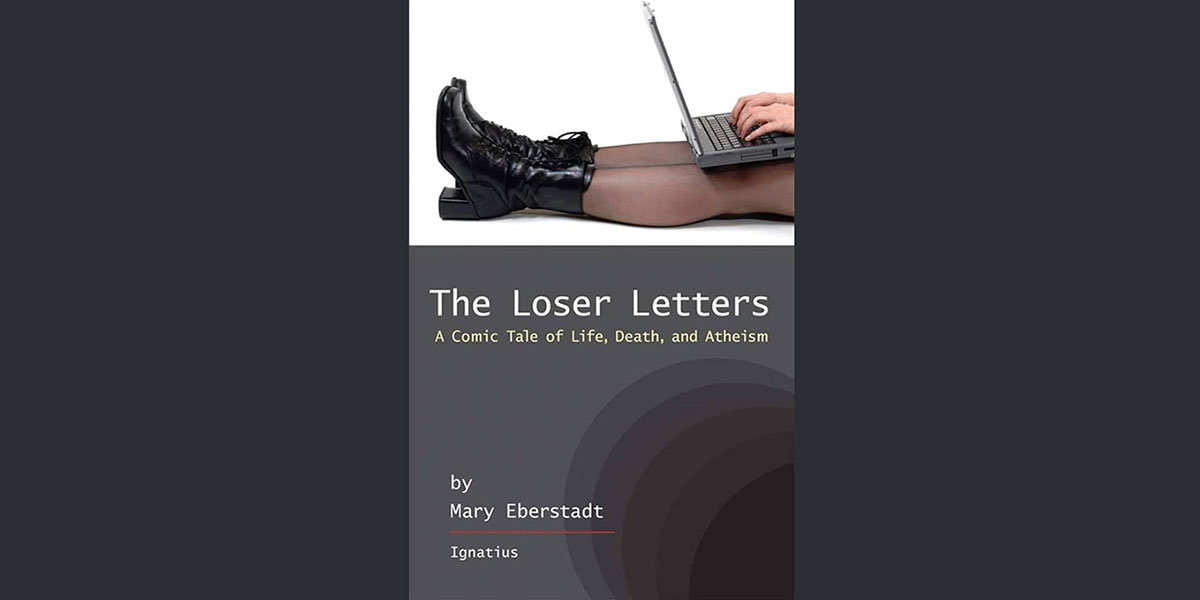
IT IS 84 years since C.S. Lewis published The Screwtape Letters: Letters from a Senior to a Junior Devil. The year was 1942, the middle of the Second World War, when victory for the free world was by no means certain. It quickly became a wartime bestseller.
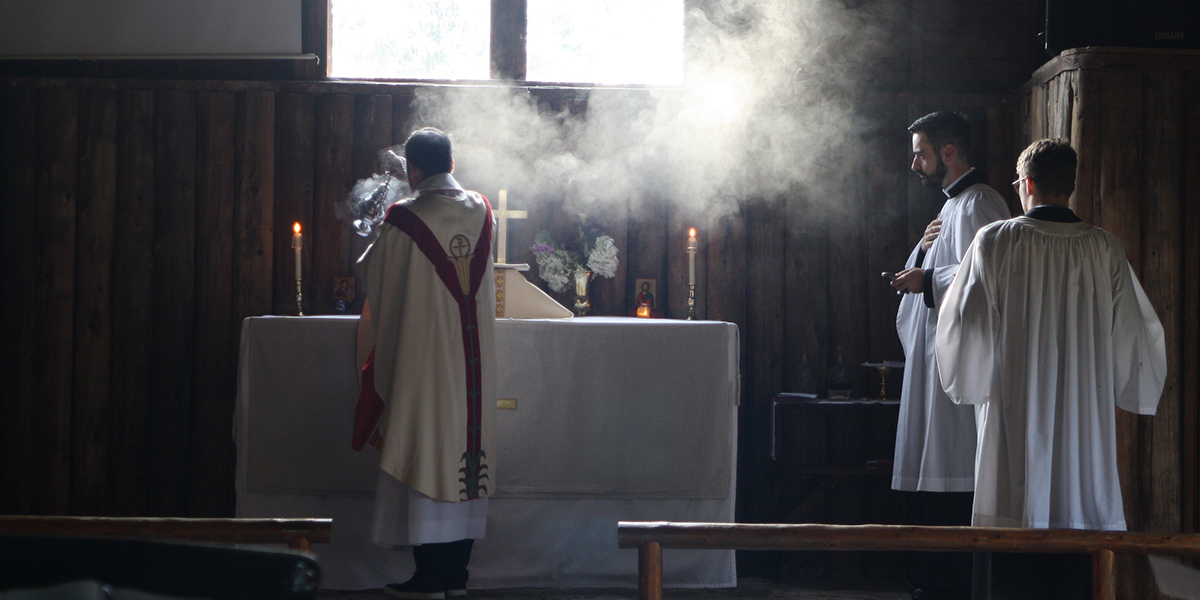
This sermon was preached on May 3rd as part of an Eastertide homily series on the spiritual senses held at St. Thomas’s Anglican Church in Toronto.
AN Easter homily series on the spiritual senses got off to a strong start on April 12 at St. Thomas’ Anglican Church in Toronto.
Copyright © 2026 The Anglican Planet. All rights reserved