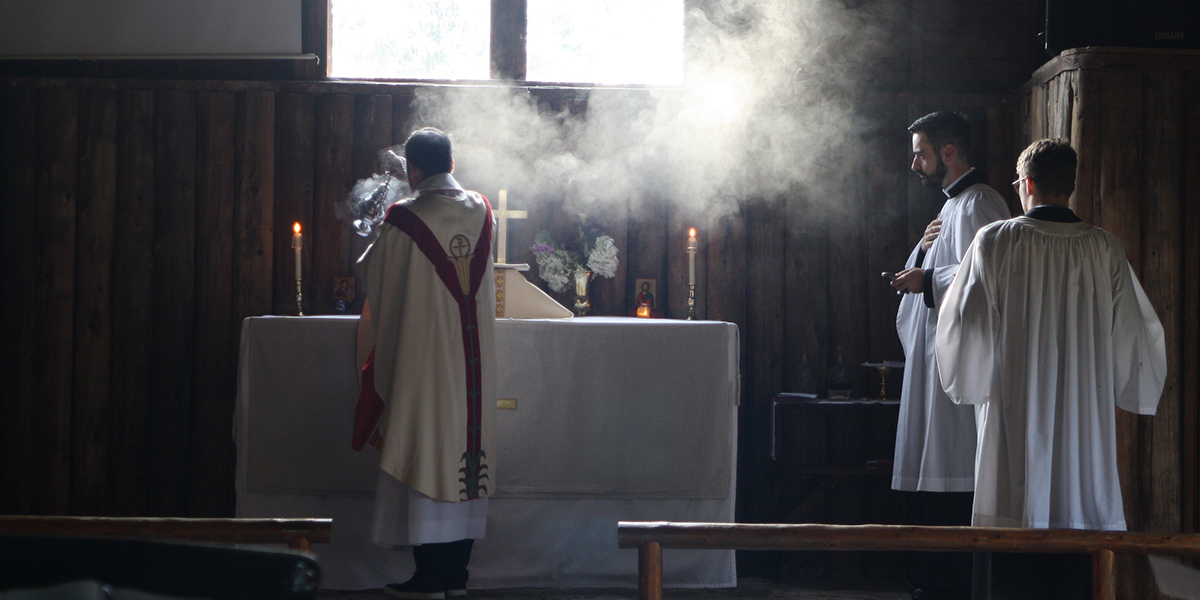
Description: Prayer itself is a kind of incense, rising up before God’s throne, a pleasing odour to the Lord. And the incense that is burned at St. Thomas’s, provides a fitting atmosphere for prayer.
By Joseph Mangina
This sermon was preached on May 3rd as part of an Eastertide homily series on the spiritual senses held at St. Thomas’s Anglican Church in Toronto.
I am neither a prophet, nor the son of a prophet; but I am the son of a solid waste disposal expert, a trash collector, in Brit-speak a rag-and-bones man, or as we would have said in the American vernacular of my childhood, a garbage man. My father owned and operated a small garbage collection business in a leafy New Jersey suburb. When I was a boy I used to accompany him occasionally on his route, and when I was 15, I spent a memorable summer working alongside my dad, hoisting those enormous bins on my shoulders and riding shotgun on the back of the truck. My dad was a garbage man, so I trust you will forgive me if I say I know a thing or two about smells.
The best stop in purely olfactory terms was the flower shop, where we were surrounded by the odours of fresh-cut roses, ferns, irises, and lilies. Less pleasant but certainly interesting was the A&P supermarket, with its earthy mix of rotting produce, spoiled milk, and the deli counter leftovers. There were the many residential customers, their bins a cross-section of twentieth century suburban life, all coffee grounds and soup cans and cereal boxes; this was in the days before recycling. The stop I dreaded most was the nursing home, where, as soon as we approached the loading dock, our noses were assaulted by an array of foul odours – I suspect those plastic bags were full of soiled diapers, maybe some medical waste, though I never dared look – it was enough to do to keep from retching.
All these things and more were mashed together by the truck’s great compactor blade – pulling the lever to make this happen was one of the joys of the job – and hauled off to be unloaded at the county landfill. Nor should I neglect to mention the distinctive aroma of the truck cab itself: a heady mix of engine oil, industrial-grade coffee, and my father’s cigars. Even today, the odour given off by a passing garbage truck can make me wax nostalgic, like Proust’s madeleine evoking memories of lost time.
Smell is perhaps the most primitive and involuntary of all the senses. You can close your eyes, cover your ears, or even be picky about what you touch or put in your mouth. It’s much harder to control what goes into your nose. People have to breathe, after all. Smell triggers something deep in the brain, maybe even deep in the soul. Where there’s life, there’s smell; just as where there’s death, there’s smell, because when living things die the process of decomposition sets in, and the results are often not pretty. So it is that when Jesus arrives at the tomb of Lazarus, too late, and orders that the stone be rolled away, Martha protests (I quote the King James Version): “Lord, by this time he stinketh: for he hath been dead four days” (John 11:39).
Lord, by this time he stinketh. I am reminded of a powerful chapter in Dostoevsky’s novel The Brothers Karamazov, titled “The Breath of Corruption,” concerning the death of Father Zossima, a staretz or elder monk. Zossima was revered by the common people for his compassion and wisdom, but also had many enemies, who envied him his popularity and questioned his ascetical practice. “He was not strict in fasting,” they said. “He allowed himself sweet things, ate cherry jam with his tea, ladies used to send it to him.” When Zossima dies, a rumor begins to circulate among his followers that his body would be miraculously preserved from corruption, as a sign of his great holiness. So confident are the friends of this miracle that they don’t even bother to open the windows of the cell where the body will lie in state. The vigil begins, as monks take turns reading the Gospel over the open coffin.
But sure enough, already by 3:00 in the afternoon, first one visitor to the cell, then another, begins to detect an odour in the air. The stench wafts through the room, until the truth can no longer be denied: Zossima’s body is decomposing, like any other mortal. Indeed, the corruption has set in even earlier than one would usually expect. Zossima’s enemies can hardly contain their glee: surely this is God’s judgment on the proud, arrogant elder! Seems that he wasn’t so holy after all. The event provokes a spiritual crisis in the life of Alyosha Karamazov, the young novice who looked on Zossima as his father in Christ. Alyosha’s problem is not that there is no miracle – far from it! He would have loved Zossima anyway, miracle or no miracle. Rather, his problem is the usual one: the triumph of the wicked; the weakness of the good; the fact that in history the good guys lose far more often than they win. If God allows such things to happen to even his most trusted servants, how can we ever trust him? It’s a scandal. It’s shameful. We might even say, it stinks.
My sisters and brothers, the breath of corruption is all around us. Sin goes around hand in hand with Death, and both of them are BFFs with the Devil, that original Nihilist, consumed by hatred of all that is. Creation is in a downward spiral into an abyss of non-being, or, as the apostle Paul calls it, a “bondage to decay.” This is just the way things are, and there’s not much you or I can do about it.
But there is something God can do about it, indeed there is something God has done about it. This is, after all, an Easter homily series. And as you are all well-catechized Anglicans, I can insert a little call-and-response at this point
Alleluia, the Lord is risen –
The Lord is risen indeed – Alleluia.
The Resurrection is the divine interruption of the way things are, God’s “No” to the powers of Sin and Death, and his even greater “Yes” to his creation. In the blessed and incorruptible flesh of our Lord Jesus Christ, God has stepped into the midst of this stinking, festering world of ours and made it new.
It is not only the New Testament that tells us this. The Old Testament, too, bears eloquent witness to the God who summons creation from nothing, life from death, sweetness from decay. There is one Old Testament book in particular that, in my view, stands at the exact intersection of Resurrection and Smell. Listen to the words of Solomon:
Rise up, my love, my fair one,
And come away.
For lo, the winter is past,
The rain is over and gone.
The flowers appear on the earth;
The time of singing has come,
And the voice of the turtledove
Is heard in our land.
The fig tree puts forth her green figs,
And the vines with the tender grapes
Give a good smell.
Rise up, my love, my fair one,
And come away! (Song of Songs 2:10-13, NKJV)
The Song of Songs is a book of smells not just because it’s a spring poem but because it’s a love poem, a bodily poem, a sexy poem. Among other things, the lovers in the poem smell good to one another:
While the king is at his table,
My spikenard sends forth its fragrance.
A bundle of myrrh is my beloved to me,
That lies all night between my breasts.
My beloved is to me a cluster of henna blooms
In the vineyards of En Gedi. (Song of Songs 1:12-14, NKJV)
The traditional interpretation of the Song of Songs, both Jewish and Christian, has read it as an allegory of the love affair between the Lord and his people – whether the people Israel, or the bride of Christ, the church. We find this reading in theologians such as Origen, Gregory of Nyssa, and Bernard of Clairvaux, as well as more recent commentators like Ellen Davis and Robert Jenson. The earthly love described in the Song is a type or figure of that mystical union. Touch, sight, taste, hearing, and yes, even smell are essential to the lovers’ experience, and so we think there must be something of that in our relation to God.
Of course, I can’t “literally” tell you what God smells like. But I do know that the Word became flesh, and dwelt among us, and so entered this world of smells. The Blessed Virgin must have pressed her nose against her baby’s skin from time to time and sniffed him, like any other parent. Jesus sweated under the heat of the Galilean sun. Do we think he had no armpits? He surrounded himself with a motley collection of followers, some of them respectable enough to be sure, but others who probably could have used a bath. An anonymous woman, a notorious sinner, anointed his feet with a fragrant ointment and dried them with her hair, and Jesus commended her for her extravagant act of generosity. The Word became flesh, and smelt among us.
You sometimes hear it said that Golgotha, the hill outside the walls of Jerusalem where Jesus was crucified, was the town garbage dump. Well, we don’t know that. The gospel writers don’t say it, and so far as I know neither do the ancient commentators. But there is nevertheless a rightness, a fitness, about the idea. In Christ, God pitched his tent on the smoldering landfill we’ve made out of the garden he gave us. Sometimes the stench is awful: the odour of corruption hovers all around. And yet for all that, the Bridegroom has not abandoned the Bride. We live – truly we live – by the promise of the richly material and sensual future God has prepared, a new creation, and a city with its own fragrant foliage: “Then the angel showed me the river of the water of life, bright as crystal, flowing from the throne of God and of the Lamb through the middle of the street of the city. On either side of the river is the tree of life with its twelve kinds of fruit, producing its fruit each month, and the leaves of the tree are for the healing of the nations” (Rev. 22:1-2, NRSV).
Which is why I love the incense here at St. Thomas’s, affectionately known as “Smoky Tom’s.” Incense is not a sacrament. There’s no divine command that we should use it. And yet there is, again, a certain fitness about it. Israel’s Temple was a house filled with smoke, and the church, as the new Temple, has a place for incense too. A good deal earlier in the book of Revelation, the prophet is given a vision of the cosmic liturgy around God’s throne in heaven. And one of the things he sees there is a company of twenty-four elders, worshiping Christ the Lamb, each elder holding a golden bowl full of incense, “which are the prayers of the saints” (Rev. 5:8, NRSV).
So prayer itself is a kind of incense, rising up before God’s throne, a pleasing odour to the Lord. And the incense you burn at Smoky Tom’s, and in my own parish of St. Martin-in-the-Fields, provides a fitting atmosphere for prayer – prayer that the Lord Jesus will come soon; that the sufferings and injustices of this present age will come to an end; that the garbage heap will become a garden; that our bodies will be raised and renewed; and that we will be joined to the gloriously material body of God’s Son. Our prayers and our incense alike ascend, and fill the Lord’s nostrils, and he is pleased – not only pleased but moved to rekindle and show his great love for us. “Rise up, my love, my fair one, and come away. For, lo, the winter is past, the rain is over and gone. . . . Arise, my love, my fair one, and come away.” TAP
Dr. Joseph Mangina is Professor of Theology at Wycliffe College, Toronto School of Theology. He is the author of works on the thought of Karl Barth and a commentary on the book of Revelation. Most recently he has co-edited the volume Figural Reading and the Fleshly God: The Theology of Ephraim Radner (Baylor University Press, 2025).
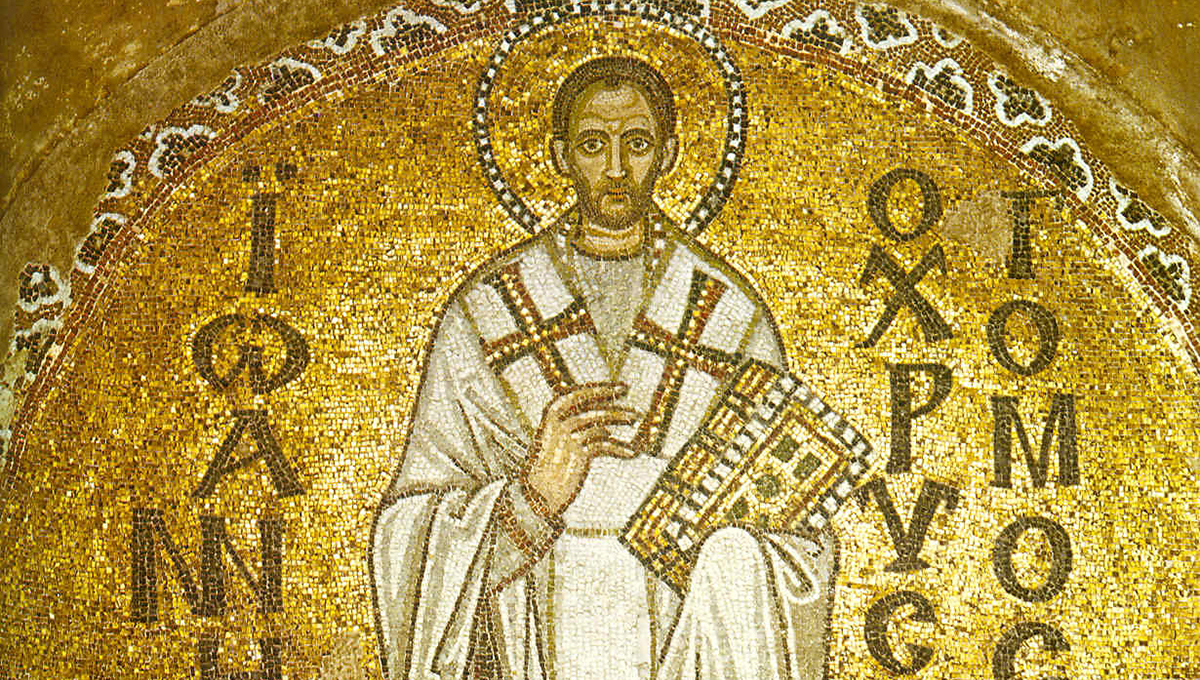
IN THE FOURTH century, in the region we now know as Turkey, there lived a pastor named John. Although his life was relatively short (he died at the age of 58) he has had an enormous impact on the Christian church. John was incredibly gifted, intense, and deeply serious about his faith. Not long after his conversion, he withdrew from society to live as a hermit for several years. He allegedly spent two full years doing nothing but memorizing the Bible while standing up. It was a rigorous discipline; he hardly slept, and his health was permanently damaged by the ordeal.
continue reading
ONCE when a friend and I were having coffee and chatting about hell, as friends do, and I grew increasingly squeamish at the topic, as one does, my friend surprised me by saying: “Why would someone bother sharing the gospel, if they weren’t thinking about saving someone from going to hell?”
continue reading
POOR Pierre Poilievre, leader of the Conservative Party of Canada. On the one hand, a part of his base thinks he is too mild. That he should be more outraged in response to a long list of grievances from the past years. On the other hand, media pundits (and, indeed, the polls) suggest he may be too pugnacious, too negative, to really appeal to the broader Canadian public. We’ll see if his new advisor, Steve Outhouse, can help him pivot to a new, more positive and visionary tone, to give him renewed hope of electoral success.
continue reading
Judith Snowdon is an accomplished Canadian composer and arranger of choral, instrumental and worship music. For more than three decades she has received commissions from choirs as well as awards for her work. The Royal Conservatory of Music and the Canadian National Conservatory of Music have published many of her piano pieces for their students, while several of her hymns have appeared in denominational hymnals. Sue Careless asked the New Brunswick Anglican more about her musical journey.

IT IS 84 years since C.S. Lewis published The Screwtape Letters: Letters from a Senior to a Junior Devil. The year was 1942, the middle of the Second World War, when victory for the free world was by no means certain. It quickly became a wartime bestseller.
This sermon was preached on May 3rd as part of an Eastertide homily series on the spiritual senses held at St. Thomas’s Anglican Church in Toronto.
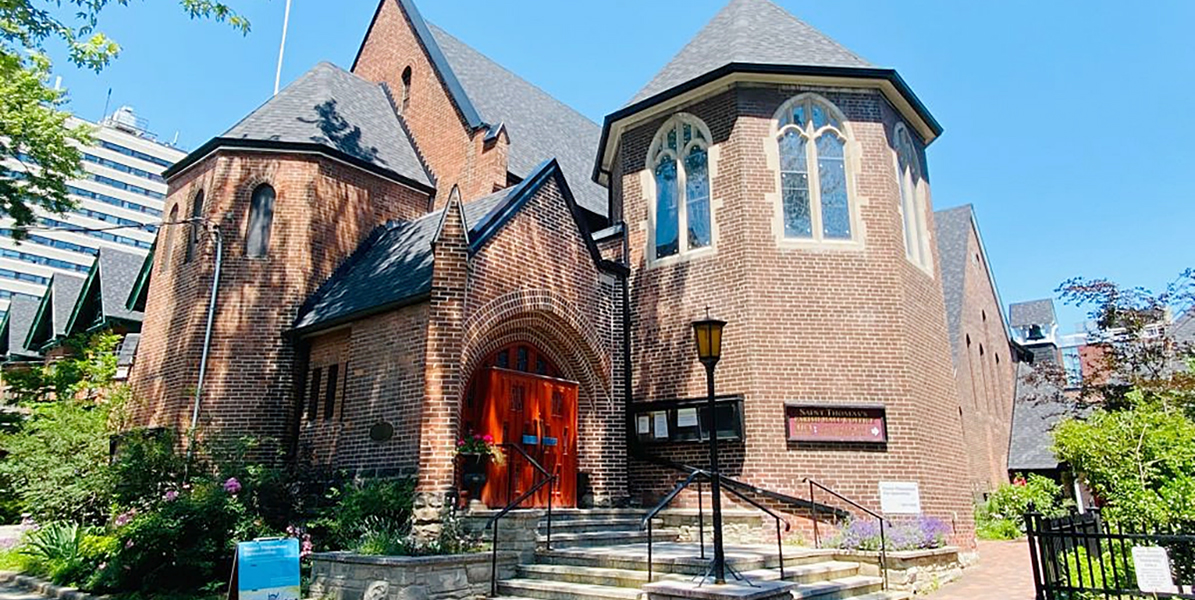
AN Easter homily series on the spiritual senses got off to a strong start on April 12 at St. Thomas’ Anglican Church in Toronto.
Copyright © 2026 The Anglican Planet. All rights reserved